
As Trench Collapse Lawsuits: Proving OSHA Violations in Construction Injury Cases takes center stage, this opening passage beckons readers with engaging information on the legal aspects of construction injuries. The complexities of proving OSHA violations in such cases unveil a challenging yet crucial aspect of ensuring accountability and safety in the construction industry.
Delving into the details of trench collapse incidents and the legal implications surrounding them sheds light on the significance of upholding OSHA regulations for the well-being of workers in construction sites.
Understanding Trench Collapse Lawsuits
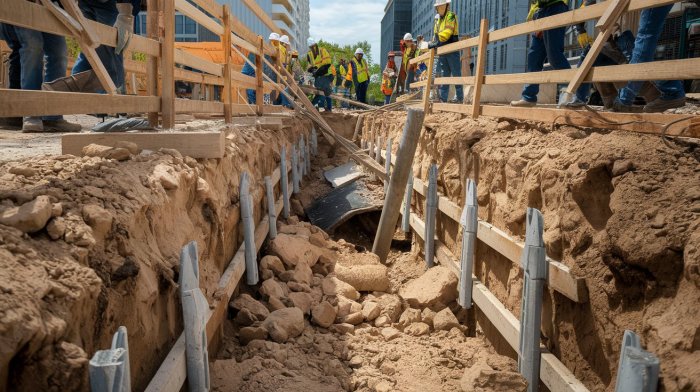
When it comes to construction injury cases, trench collapse lawsuits are legal actions filed by injured workers or their families against employers or other responsible parties due to accidents involving trench collapses. These lawsuits aim to hold accountable those who violate safety regulations and fail to provide a safe working environment for construction workers.
Common Scenarios Leading to Trench Collapse Accidents
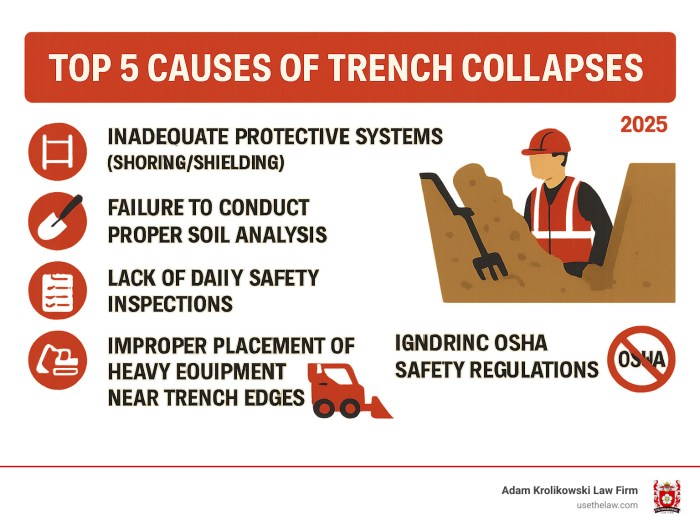
Trench collapse accidents can occur due to various factors, including inadequate shoring or sloping of trenches, failure to conduct proper inspections, lack of protective systems, such as trench boxes or shields, and disregarding safety protocols Artikeld by the Occupational Safety and Health Administration (OSHA).
For example, a trench collapse may occur when heavy rainfall saturates the soil, causing it to become unstable and collapse on workers inside the trench.
Legal Implications and Consequences of Trench Collapse Incidents
In the event of a trench collapse incident, there can be serious legal implications for the parties involved. Employers who are found to have violated OSHA regulations related to trench safety may face penalties, fines, and even criminal charges. Additionally, injured workers or their families may be entitled to compensation for medical expenses, lost wages, pain and suffering, and other damages resulting from the accident.
It is crucial for construction companies to prioritize safety measures and comply with OSHA standards to prevent trench collapse accidents and the associated legal consequences.
OSHA Regulations and Compliance in Construction
When it comes to construction sites, the Occupational Safety and Health Administration (OSHA) has specific regulations in place to ensure the safety of workers, particularly when it comes to trench safety.
Trench Safety Regulations
- Excavations deeper than 5 feet must have protective systems in place to prevent collapse.
- Regular inspections of trenches are required to identify and address any potential hazards.
- All workers must be trained on trench safety and the proper use of protective equipment.
Preventing Trench Collapse Accidents
- Ensure proper sloping or benching of trench walls to prevent collapse.
- Use protective systems such as shoring, shielding, or trench boxes in deeper excavations.
- Keep heavy equipment away from trench edges to avoid destabilizing the soil.
Importance of OSHA Compliance
OSHA compliance is crucial in construction to ensure that workers are protected from potential hazards and accidents. By following OSHA regulations related to trench safety, construction companies can create a safer work environment and prevent serious injuries or fatalities.
Proving OSHA Violations in Trench Collapse Lawsuits
To prove OSHA violations in trench collapse lawsuits, key evidence is crucial in establishing negligence on the part of the construction company. Documentation such as safety logs, inspection records, witness testimonies, and expert opinions play a vital role in demonstrating violations of OSHA regulations.
Role of Documentation in Proving Violations
- Safety Logs:Comprehensive safety logs that detail safety procedures, training records, and equipment maintenance can provide insight into whether the construction site was following OSHA guidelines.
- Inspection Records:Regular inspection reports conducted by qualified personnel can reveal any shortcomings in safety measures and potential hazards that were not addressed by the construction company.
Use of Witness Testimonies and Expert Opinions
- Witness Testimonies:Testimonies from individuals present at the construction site can offer firsthand accounts of safety lapses, inadequate training, or negligence that may have contributed to the trench collapse.
- Expert Opinions:Experts in construction safety and OSHA regulations can provide professional assessments of the construction practices observed at the site and determine if they were in violation of OSHA standards.
Factors Affecting Liability in Trench Collapse Lawsuits
Liability in trench collapse lawsuits can be influenced by various factors, especially when multiple parties are involved. The determination of liability often revolves around the roles and responsibilities of subcontractors, general contractors, and property owners, as well as considerations of negligence, safety protocols, and supervision.
Impact of Subcontractors, General Contractors, and Property Owners
When it comes to trench collapse cases, the involvement of subcontractors, general contractors, and property owners can significantly impact liability. Subcontractors may be held responsible for directly overseeing the work in the trench, ensuring compliance with safety regulations, and providing adequate training to their employees.
General contractors, on the other hand, may bear liability for supervising the overall construction site, including trench work, and ensuring that all parties adhere to safety protocols. Property owners may also face liability if they were aware of unsafe conditions on their property or failed to address known hazards promptly.
Negligence, Safety Protocols, and Supervision
Negligence, failure to follow proper safety protocols, and inadequate supervision are key factors in establishing liability in trench collapse lawsuits. Negligence can range from improper trench shoring and sloping to lack of proper safety equipment and training. Adherence to OSHA regulations and industry standards is crucial in determining whether parties fulfilled their duty of care in ensuring a safe work environment.
Additionally, supervision plays a critical role in preventing accidents and ensuring that all workers are adequately protected while working in trenches.
Closure
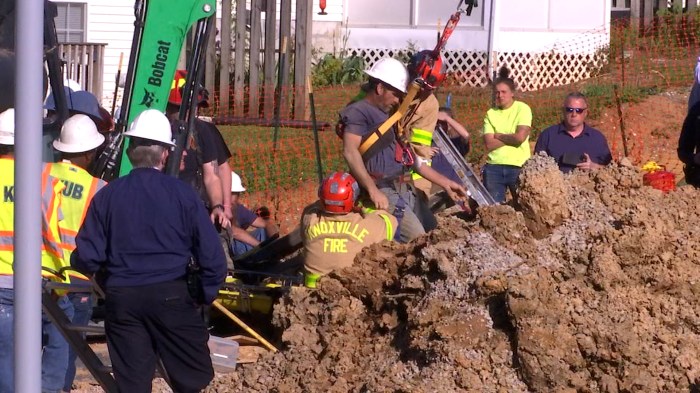
In conclusion, the discussion on Trench Collapse Lawsuits: Proving OSHA Violations in Construction Injury Cases emphasizes the importance of diligence in maintaining safety standards to prevent such tragedies. By understanding the legal framework and evidentiary requirements, stakeholders can work towards a safer work environment for all.
Question & Answer Hub
What should I do if I witness a trench collapse at a construction site?
Immediately report the incident to the authorities and ensure the safety of yourself and others before taking any further action.
How can I determine if an OSHA violation has occurred in a trench collapse case?
An OSHA violation can be identified through evidence like safety logs, inspection records, witness testimonies, and expert opinions that establish non-compliance with safety regulations.
Who can be held liable in a trench collapse lawsuit?
Liability can extend to subcontractors, general contractors, and property owners depending on their involvement and responsibilities in ensuring site safety.